In addition to style, finish, and color, the type of door handle is also an important consideration. Although knobs and levers essentially serve the same purpose—helping open and close a door—they differ in comfort, accessibility, durability, and overall appearance.
The right choice can improve both the functionality and design of your living space, making everyday use more convenient. Below, we will compare door knobs and levers, examine their main pros and cons, and help you decide which option best suits your home.
What are door knobs and levers?
Before comparing their advantages and disadvantages, it’s vital to understand how door knobs and levers work. While both are made to operate a door latch, they differ in shape, functionality, and the user experience they provide.
Door knob: Definition, basic mechanism, and common styles
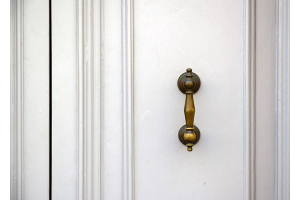
A door knob is a rounded or shaped handle that must be grasped and rotated to retract the latch and open the door. It runs through a spindle connected to the latch mechanism inside the door, allowing the latch to move when the knob is turned.
Door knobs are available in a wide range of styles, rendering them suitable for both traditional and modern interiors.
Because of their classic appearance and compact profile, door knobs remain a popular choice for bedrooms, closets, and decorative interior doors.
Door lever: Definition, basic mechanism, and common styles
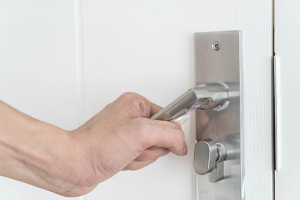
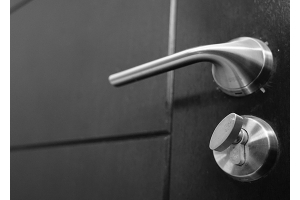
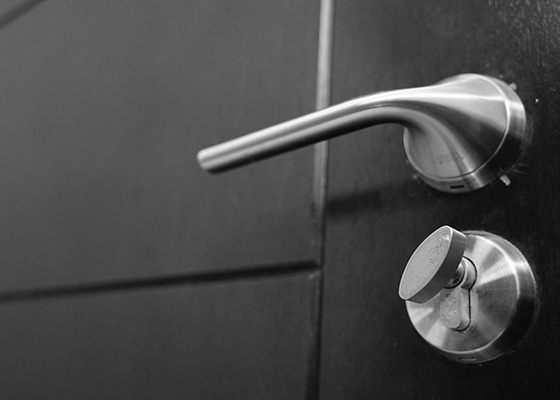
A door lever is a horizontal handle that opens with a light touch, which is especially convenient for children, the elderly, or when your hands are full of bags (if it is installed on the entrance door).
Like a door knob, it is connected to a spindle and latch mechanism, but requires less gripping force to operate.
Door levers are widely used in home and business environments due to their convenience and ease of use.
Knobs vs. Levers
Although both options perform the same basic function, their differences become apparent in everyday use. Comparing door knobs and levers across key factors can help you choose hardware that matches your home's needs, style, and budget.
|
Parametr |
Knobs |
Levers |
|
Accessibility and ease of use (the ADA-compliance factor) |
Require a firm grip and twisting motion to operate. This can be challenging for children, older adults, and people with limited hand strength or mobility. Most standard door knobs do not meet ADA accessibility requirements. |
Can be operated with a hand, elbow, or forearm using minimal force. Their user-friendly design generally aligns better with ADA accessibility guidelines, making them a preferred choice for universal design. |
|
Design, styles, and finishes |
Often associated with classic, traditional, and vintage interiors. Available in numerous decorative shapes, including round, crystal, and ornate designs. |
Commonly used in contemporary and transitional spaces. Sleek profiles and clean lines make levers a popular choice for modern homes, although traditional styles are also available. |
|
Security and child safety |
Less likely to be operated accidentally by young children, making them a practical option for certain interior spaces. Security largely depends on the lock mechanism rather than the handle itself. |
Easier to use for both adults and children. While this improves convenience, it may reduce child resistance in some situations. |
|
Cost and budget considerations |
Typically available at a lower price point, especially in standard residential designs. Widely considered a budget-friendly option for large projects. |
Often cost slightly more due to their design and accessibility benefits. Premium finishes and designer styles can further increase the price. |
|
Installation and maintenance |
Straightforward to install and maintain. Their compact design is less likely to catch on clothing or bags. |
Installation is generally similar to knobs, as most use the same door preparations. However, protruding handles may require occasional tightening with frequent use. |
Each room requires a different level of access, so our wide product range of door hardware covers all your needs:
-
Passage set used where locking is not required (living rooms, dining rooms), provides free passage without locking.
-
Privacy set equipped with an internal locking mechanism, ideal for bedrooms and bathrooms.
-
Dummy set does not include a latch or lock; used for inactive sashes or as a decorative solution to maintain a uniform hardware style.
Summary: Pros and сons
Both door knobs and levers offer distinct benefits, and neither option is universally better than the other. The right choice depends on your priorities, whether that’s accessibility, aesthetics, child safety, or budget.
Door knob advantages and disadvantages
Advantages
-
Generally, more affordable than door levers.
-
Available in a wide variety of traditional and decorative styles.
-
Compact design that is less likely to catch on clothing or bags.
-
It can be more difficult for small children to operate.
Disadvantages
-
It requires a twisting motion and a firm grip to use.
-
Less convenient for people with limited hand strength or mobility.
Door lever advantages and disadvantages
Advantages
-
Easy to operate with minimal effort.
-
Better suited for older adults, children, and individuals with mobility limitations.
-
Often meet accessibility and ADA-friendly design requirements.
-
Available in sleek, modern designs that complement contemporary interiors.
Disadvantages
-
Typically cost more than comparable door knobs.
-
Easier for young children to open and may occasionally catch on loose clothing or straps.
Which is right for your home?
The best choice depends on how you use your space and what matters most to you. Consider your home's style, needs, and your budget.
Choose door knobs if…
-
You prefer a traditional, classic, or vintage-inspired interior design.
-
Budget is a key factor, and you need a cost-effective hardware solution.
-
You want handles that are slightly more difficult for young children to operate.
Choose door levers if…
-
Accessibility and ease of use are top priorities.
-
Your household includes older adults, children, or individuals with limited hand mobility.
-
You prefer a modern, streamlined look that complements contemporary interiors.
Our product range
The Door Design Lab assortment features high-quality, stylish handles from well-known brands such as AGB, Belldinni, DND, Emtek, Fuaro, Morelli, and Punto. They are available with round, square, or rectangular rosettes.
Available knob colors:
-
Satin nickel.
-
Polished chrome.
-
Satin chrome.
-
Satin brass.
-
Black.
Available lever colors:
-
Chrome.
-
Satin nickel.
-
Polished chrome.
-
Matte nickel.
-
White.
-
Satin brass.
-
Black.
-
Gold.
-
Bronze.
-
Satin steel.
FAQ
-
Can you replace a door knob with a lever handle?
Yes. In most cases, door levers and door knobs use the same standard door preparation, making replacement a simple DIY project.
-
Are door levers less secure than knobs?
Not necessarily. Security depends primarily on the lock mechanism, not the handle style. A lever and a knob with the same lock will generally provide comparable security.
-
Can you mix door knobs and levers in the same house?
Yes. Many homeowners use levers in high-traffic or accessibility-focused areas and knobs in bedrooms, closets, or traditionally styled rooms to balance functionality and design.